
 McDonald's
Free tool
Subway Nutrition Calculator: Calories, Macros and More
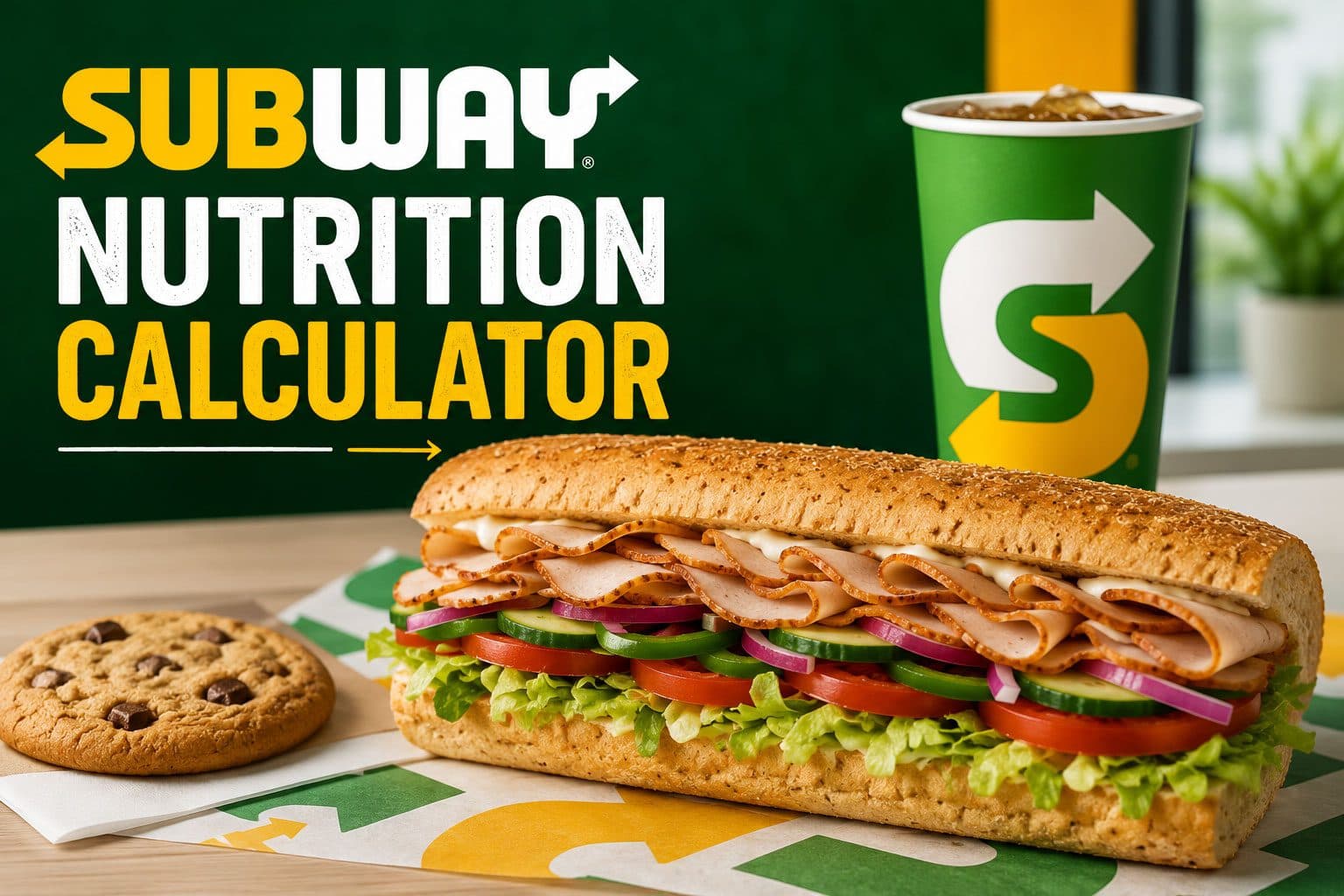
A Subway Nutrition Calculator is a simple way to estimate the calories, macros and dietary content of a fully customized order, from a six-inch turkey sub to a loaded footlong with cookies and a drink. Our tool, featuring updated dietary information, shows how each ingredient affects a meal's calories, protein, carbs, sugar, fat and sodium, then offers practical suggestions for making the order healthier and more balanced, but still enjoyable.
Whether you're building a sub, wrap, salad or protein bowl, this calculator helps you understand what is actually in your food and make a choice that fits your goals without giving up the ingredients you enjoy.
Build your Subway order and experiment with small changes to see how sandwich size, bread choice, protein, cheese, sauces, veggies, sides and drinks can influence the final nutrition facts.
Menu
Oven-Roasted Turkey (6-inch)
280 cal · 18p / 46c / 3.5f
Italian B.M.T. (6-inch)
360 cal · 19p / 44c / 15f
Tuna (6-inch)
480 cal · 19p / 40c / 28f
Black Forest Ham (6-inch)
290 cal · 18p / 46c / 4.5f
Roast Beef (6-inch)
290 cal · 23p / 43c / 4.5f
Subway Club (6-inch)
310 cal · 22p / 44c / 5f
Sweet Onion Chicken Teriyaki (6-inch)
370 cal · 25p / 57c / 4.5f
Meatball Marinara (6-inch)
480 cal · 21p / 51c / 22f
Steak & Cheese (6-inch)
340 cal · 26p / 41c / 9f
Spicy Italian (6-inch)
450 cal · 18p / 44c / 23f
Chicken & Bacon Ranch (6-inch)
540 cal · 34p / 44c / 26f
Rotisserie-Style Chicken (6-inch)
350 cal · 29p / 41c / 8f
Cold Cut Combo (6-inch)
340 cal · 16p / 45c / 11f
Veggie Delite (6-inch)
200 cal · 9p / 39c / 2f
Oven-Roasted Turkey (Footlong)
560 cal · 36p / 92c / 7f
Italian B.M.T. (Footlong)
720 cal · 38p / 88c / 30f
Spicy Italian (Footlong)
900 cal · 36p / 88c / 46f
Meatball Marinara (Footlong)
960 cal · 42p / 102c / 44f
Chicken & Bacon Ranch (Footlong)
1080 cal · 68p / 88c / 52f
Tuna (Footlong)
960 cal · 38p / 80c / 56f
Steak & Cheese (Footlong)
680 cal · 52p / 82c / 18f
Oven-Roasted Turkey Wrap
430 cal · 25p / 47c / 16f
Oven-Roasted Turkey Chopped Salad (no dressing)
110 cal · 12p / 12c / 2.5f
Rotisserie-Style Chicken Chopped Salad (no dressing)
170 cal · 20p / 10c / 6f
Chocolate Chip Cookie
210 cal · 2p / 30c / 10f
White Chip Macadamia Nut Cookie
220 cal · 2p / 29c / 11f
Oatmeal Raisin Cookie
200 cal · 3p / 30c / 8f
Double Chocolate Chip Cookie
210 cal · 2p / 30c / 10f
Coca-Cola Classic (20 oz fountain)
240 cal · 0p / 65c / 0f
Your meal
Add items from the menu — totals appear here.
Published US nutrition data; recipes vary by location. Not sure what your day’s numbers should be? Set your daily targets.
The nutrition calculator on this page is an independent tool and is not affiliated with, endorsed by, or sponsored by Subway IP LLC. This tool is intended for informational purposes only and should not be relied upon as official nutritional or medical guidance from Subway.
Nutrition values are estimates based on publicly available information, standard recipes and common customizations. Actual nutrition may vary by restaurant, portion size, ingredient availability and how each sandwich is made.
The Math Behind Our Calculator: Simple, Honest and Helpful
How does this Subway calculator work?
This calculator starts with publicly available Subway nutrition and ingredient information. Because every Subway order is already assembled ingredient by ingredient, the menu is a natural fit for a calculator. We rebuild your sub, wrap, salad or bowl from its components so every choice, from the bread to the last sauce, is reflected in the totals.
Sandwiches are made by hand, so sauce amounts, veggie portions and meat placement vary in practice. Calculator results are based on standard serving sizes and should be treated as estimates rather than exact laboratory-tested numbers for the sandwich you receive.
Why is my order a few calories different from the Subway app?
Our calculator estimates nutrition by adding up the individual parts of your order. Because of rounding, portion differences and how customized items are calculated, a standard order may be a few calories different from the total displayed by Subway.
The benefit is that each change you make, from swapping mayo for mustard to skipping the cheese, is reflected in your final estimate.
What nutrition information does this calculator include?
The calculator estimates:
- Calories
- Protein
- Total Carbohydrates
- Total Fat
- Saturated Fat
- Sugar
- Sodium
Sodium deserves special attention at Subway because deli meats, cheese, bread and sauces all contribute, and a footlong doubles every one of them.
Can I calculate an entire Subway meal?
Yes. You can build your sandwich, then add chips, cookies and a drink to see the estimated nutrition for the complete order. The combo add-ons are where many Subway meals quietly grow. A sandwich that fits your goals can be undone by a cookie, chips and a large sweetened soda.
Can I use this calculator for weight loss, high-protein, low-carb or lower-sodium orders?
Yes, but use the results as estimates.
- For fewer calories, compare a six-inch against a footlong, swap creamy sauces for mustard or vinegar, and let the free veggies provide the volume.
- For more protein, compare rotisserie-style chicken, turkey, roast beef and double-meat builds, or move the same fillings into a protein bowl.
- For fewer carbs, compare salads and protein bowls against subs, and choose a wrap or six-inch over a footlong when you want bread. Sweetened drinks and cookies are the other big carb sources.
- For less sodium, choose a six-inch over a footlong, go lighter on deli meats, cheese and salty sauces, and load up on vegetables.
The best choice depends on your complete order, appetite and goals. A lower-calorie build is not automatically higher in protein, lower in sodium or more filling.
Why should I trust this Subway calculator?
We created this Subway nutrition calculator to make customized ordering easier and more transparent. Gary and I track nutrition and understand how difficult it can be to estimate a sandwich once bread, protein, cheese, six veggies and two sauces are involved.
This tool was built to help solve that problem. It calculates nutrition based on the individual parts of your order, including size, bread, protein, cheese, vegetables, sauces, sides and drinks. Our goal is to make the information as useful and accurate as possible while being clear that sandwiches are made by hand and nutrition values can vary.
We also update the calculator as menu items, ingredients and serving sizes change. Maintaining a tool like this takes time, but the work is worthwhile when people make more informed choices without overcomplicating their meal.
This calculator is a free resource built by real people who understand how helpful simple, practical nutrition tools can be. To learn more about us and why we created Good Enough, check out our story.
Is Subway healthy?
Subway can be one of the easier fast-food chains for balanced ordering because vegetables are unlimited, portions come in two clear sizes and every ingredient is visible as it goes on. But a Subway sandwich is not automatically healthy, and the difference between builds is bigger than most people expect.
A six-inch turkey sub loaded with veggies and mustard, a footlong with double cheese, bacon and ranch, and a salad with creamy dressing are three very different meals. The restaurant does not determine whether your choice is healthy. The build, the size and the combo add-ons matter more.
There is no need to make the perfect order. A better order is one that you enjoy, understand and intentionally choose.
The Biggest Things That Change Subway Order Calories
Six-Inch vs Footlong
The size decision doubles or halves everything at once: bread, meat, cheese, sauce and sodium. It is the single biggest lever on the menu. If a footlong is the right amount of food for your day, order it. If you order it by default, try pricing out a six-inch with an extra veggie load in the calculator first.
Creamy Sauces
Mayo, ranch, chipotle sauce and other creamy dressings are the densest ingredients on the line. Yellow mustard, deli mustard, vinegar, hot sauce and sub spices deliver flavor for almost nothing. Swapping the sauce is the highest-value single change on most sandwiches.
Cheese, Bacon and Double Meat
Each add-on is reasonable alone, and they stack quickly together. Double meat raises protein along with calories, so it can be a deliberate choice; double cheese and bacon mostly raise fat and sodium. Keep the one that matters most to you.
Bread and Wraps
Most standard breads are closer to each other than the menu board suggests, while flatbreads, wraps and specialty cheese-topped breads can differ more. Bread choice matters, but it usually matters less than size and sauce. Choose the bread you enjoy and control the sandwich elsewhere.
Veggies
This is the good news section. Lettuce, spinach, tomatoes, cucumbers, peppers, onions and pickles add crunch, volume and nutrients for nearly nothing. Asking for extra veggies is the one Subway customization with no tradeoff.
The Combo: Chips, Cookies and Drinks
The meal deal add-ons can rival the sandwich. A cookie, a bag of chips and a large sweetened soda together can add more than a second six-inch sub. Keep the one you actually want and count it in the calculator.
Subs vs Wraps vs Salads vs Protein Bowls
The same fillings behave very differently across formats. A salad or protein bowl skips the bread entirely, which makes it the lightest and lowest-carb way to eat your favorite sub; the bowls essentially contain the fillings of a footlong without the bread, so they are also protein-dense. Wraps look light but the tortilla is substantial, often comparable to bread. The six-inch sub remains the balanced middle ground.
Watch the dressing on salads: a creamy dressing can return every calorie the missing bread saved. Vinegar, oil in moderation or a light dressing keeps the salad ahead.
Lower-Calorie Subway Builds To Start With
These are not automatically the healthiest choices for everyone. They are useful starting points for building a more manageable order.
Six-Inch Turkey
The classic lighter Subway order: lean protein, any standard bread, all the veggies, mustard or vinegar. It leaves room for a side or a cookie if you want one.
Six-Inch Rotisserie-Style Chicken
One of the strongest protein-per-calorie builds on the menu, and it holds up with lighter sauces because the chicken carries flavor on its own.
Veggie Delite
The all-vegetable sub is the lightest sandwich on the menu. Adding cheese or avocado turns it into a more complete meal while keeping it modest.
Salads and Protein Bowls
Any sub can become a salad or bowl. These are the best formats when carbs are the priority, provided the dressing stays light.
Ham or Roast Beef Six-Inch
Both are lean deli builds worth comparing against turkey. Roast beef tends to bring slightly more protein; all deli meats bring sodium, so the veggie load and sauce choice still matter.
Healthy Subway Orders To Try
These are not the only healthy Subway orders, and they are not meant to be perfect. They are starting points you can adjust in the calculator above based on your own goals.
The Everyday Six-Inch
How to order: Six-inch turkey on your favorite standard bread, extra veggies, mustard and vinegar, water to drink.
Why it works: Lean protein, big veggie volume and a sauce swap that saves the most for the least sacrifice. This build leaves room for a treat when you want one.
High-Protein Bowl
How to order: Protein bowl with rotisserie-style chicken or double turkey, extra veggies, oil and vinegar or a light dressing.
Why it works: Footlong-level protein without the bread, and the veggies keep it a full-sized meal.
Footlong Strategy
How to order: Footlong turkey or chicken with veggies and mustard, and save half for later.
Why it works: Footlongs are often the better value. Splitting one into two meals gets the price advantage without doubling lunch.
Vegetarian Build
How to order: Veggie Delite with provolone or avocado, extra of every vegetable, and a vinaigrette-style finish.
Why it works: The cheese or avocado adds the staying power the veggies alone lack, and the build stays one of the lightest complete meals in fast food.
How To Build A More Balanced Subway Order
Choose the Size Honestly
Match six-inch or footlong to your actual hunger, not the price sign. The size decision outweighs every topping decision combined.
Let the Veggies Do the Volume
Extra vegetables are free, crunchy and filling. A six-inch piled high often satisfies more than a sparse footlong.
Swap the Sauce Before Anything Else
Mustard, vinegar, hot sauce and spices instead of creamy sauces is the highest-value change on the menu. Test it in the calculator before removing ingredients you actually enjoy.
Make Add-Ons Deliberate
Double meat for protein is a strategy. Double cheese plus bacon plus ranch by default is a drift. Keep the add-on that serves your goal.
Count the Combo
Add the cookie, chips and drink to the calculator before deciding. Keeping your favorite and skipping the other two is usually the satisfying middle ground.
Look at Sodium as Well as Calories
Deli meats, cheese, bread and sauces all contribute sodium, and a footlong doubles all of them. If sodium matters to you, size down and veg up.
Best Subway Orders By Goal
If your goal is fewer calories:
Start with a six-inch turkey, chicken or Veggie Delite, pile on vegetables, use mustard or vinegar, and choose water or a zero-sugar drink.
If your goal is more protein:
Compare rotisserie-style chicken, roast beef, double-meat builds and protein bowls. A bowl with double meat is the protein ceiling of the menu.
If your goal is fewer carbs:
Choose a salad or protein bowl, skip the cookie and sweetened drinks, and if you want bread, a six-inch beats a wrap more often than the menu board implies.
If your goal is less sodium:
Order a six-inch, go lighter on deli meat and cheese, skip salty sauces and load vegetables. Rotisserie-style chicken tends to run leaner on sodium than cured meats.
If your goal is less sugar:
Choose water or unsweetened drinks and be mindful of cookies, sweet sauces like sweet onion, and flavored beverages.
If your goal is a vegetarian meal:
The Veggie Delite in any format, with cheese, avocado or extra dressing as the substance, is the anchor. Check current menus for plant-protein options in your region.
Frequently Asked Questions
What is the healthiest sandwich at Subway?
There is no single healthiest order for everyone, but the pattern is consistent: a six-inch lean protein, maximum vegetables and a non-creamy sauce lands among the most balanced meals in fast food. From there, the details are personal preference.
Which Subway bread is healthiest?
The standard breads are closer than people expect, and multigrain options add a little fiber. Bread choice matters far less than sandwich size and sauce, so choose the one you enjoy and manage the build elsewhere.
Is the tuna sub healthy?
Subway's tuna is mixed with mayonnaise, which makes it one of the richer proteins on the line despite tuna's lean reputation. It can absolutely fit; just compare it in the calculator against turkey or chicken and let the numbers inform the choice.
Are wraps lighter than bread?
Usually not by as much as expected, and sometimes not at all. The tortilla is substantial. If lower carbs is the goal, a salad or protein bowl gets you there more reliably.
Does toasting change the nutrition?
No meaningful change. Toast freely.
Can I use this calculator for food allergies?
The calculator may help identify ingredients, but it should not be used as an allergy-safety tool. Subway restaurants use shared preparation surfaces and utensils, so cross-contact with allergens may be possible. Review the official ingredient and allergen information and speak with a qualified medical professional when necessary.
What should I do if an item is missing or looks incorrect?
Send us a note using the contact link in the footer below. Subway menus change, limited-time items come and go, and some products vary by region. We review requests and update the calculator when reliable information becomes available.
More chains
Eating somewhere else?




Now on the App Store
Get the app.
Five minutes of setup and you will have a plan the night you install it.
Free trial. $59.99/year or $9.99/month after. iPhone and Apple Watch.