
 Chick-fil-A
Free tool
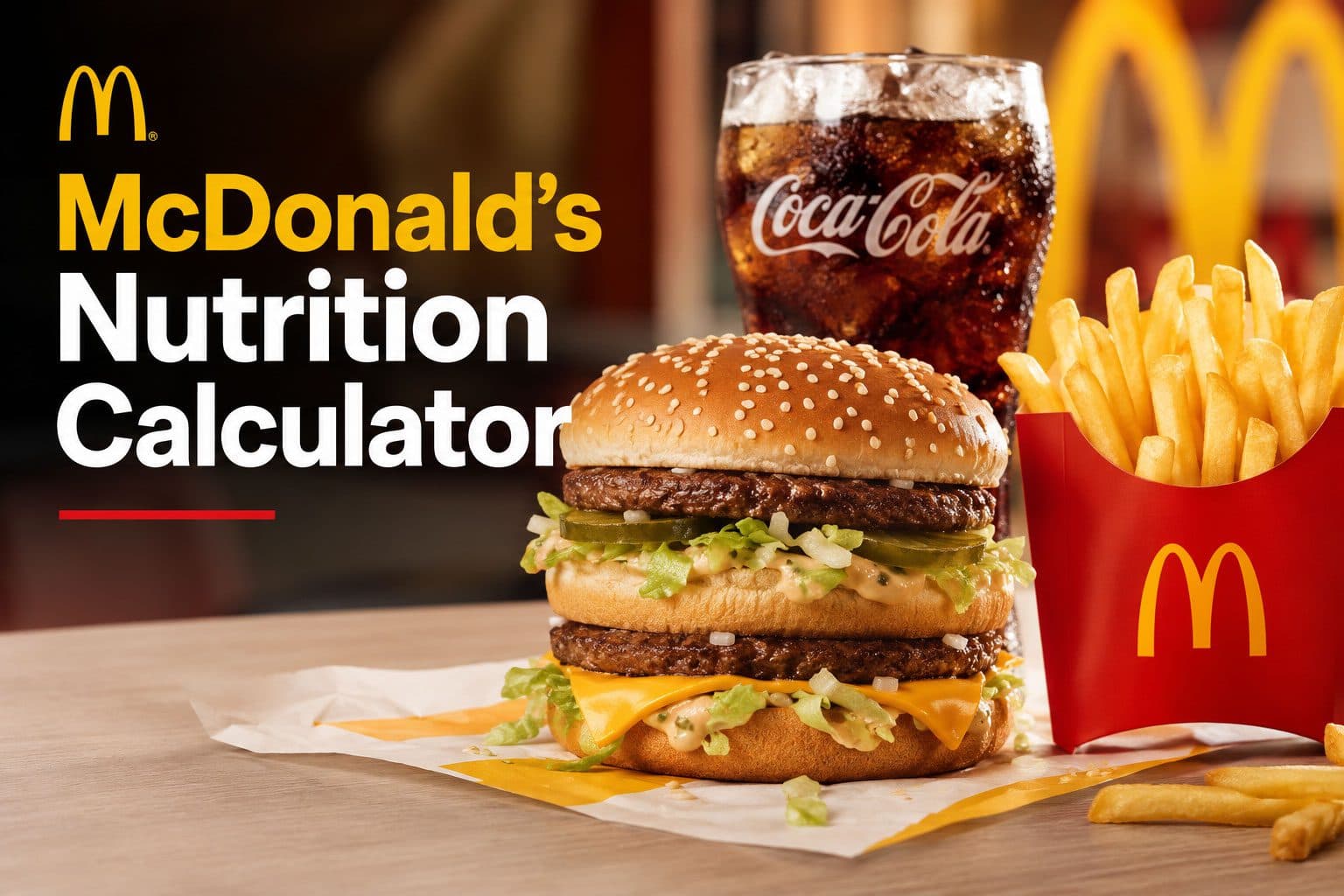
McDonald’s Nutrition Calculator: Calories, Macros and More
A McDonald’s Nutrition Calculator is a simple way to estimate the calories, macros and dietary content for standard and custom orders, from burgers and nuggets to breakfast. Our tool, featuring updated dietary information, shows how individual menu items and ingredients affect a meal’s calories, protein, carbs, sugar, fat and sodium, then offers practical suggestions for making the order healthier and more balanced, but still enjoyable.
Whether you’re ordering a burger, chicken sandwich, McNuggets, breakfast, fries, dessert, McCafé drink or Happy Meal, this calculator helps you understand what is actually in your food and make a choice that fits your goals without giving up the items you enjoy.
Build your McDonald’s order and experiment with small changes to see how portion size, cheese, sauces, buns, fries, drinks, toppings and sides can influence the final nutrition facts.
Menu
Egg McMuffin
310 cal · 17p / 30c / 13f
Sausage McMuffin with Egg
480 cal · 20p / 30c / 31f
Bacon, Egg & Cheese Biscuit
460 cal · 19p / 41c / 25f
Hash Browns
140 cal · 1p / 18c / 8f
Sausage Burrito
300 cal · 12p / 25c / 16f
Hotcakes
580 cal · 9p / 102c / 15f
Big Mac
590 cal · 25p / 46c / 34f
Quarter Pounder with Cheese
520 cal · 30p / 41c / 26f
Double Quarter Pounder with Cheese
740 cal · 48p / 43c / 42f
McDouble
400 cal · 22p / 33c / 20f
Cheeseburger
300 cal · 15p / 32c / 13f
Hamburger
250 cal · 12p / 31c / 9f
McChicken
400 cal · 14p / 39c / 21f
Chicken McNuggets (10 piece)
410 cal · 23p / 26c / 24f
McCrispy
470 cal · 26p / 46c / 20f
Spicy McCrispy
530 cal · 27p / 48c / 26f
Filet-O-Fish
390 cal · 16p / 39c / 19f
French Fries (Medium)
320 cal · 5p / 43c / 15f
French Fries (Large)
480 cal · 7p / 65c / 23f
Coca-Cola (Medium)
200 cal · 0p / 54c / 0f
Sweet Tea (Medium)
100 cal · 0p / 25c / 0f
Vanilla Shake (Medium)
590 cal · 13p / 95c / 17f
Chocolate Shake (Medium)
620 cal · 14p / 102c / 17f
McFlurry with Oreo Cookies
510 cal · 12p / 80c / 16f
Baked Apple Pie
230 cal · 2p / 33c / 10f
Vanilla Cone
200 cal · 5p / 32c / 5f
Chocolate Chip Cookie
170 cal · 2p / 22c / 8f
Tangy Barbeque Sauce
45 cal · 0p / 11c / 0f
Creamy Ranch Sauce
110 cal · 0p / 1c / 12f
Ketchup Packet
10 cal · 0p / 2c / 0f
Your meal
Add items from the menu — totals appear here.
Published US nutrition data; recipes vary by location. Not sure what your day’s numbers should be? Set your daily targets.
The nutrition calculator on this page is an independent tool and is not affiliated with, endorsed by, or sponsored by McDonald’s Corporation. This tool is intended for informational purposes only and should not be relied upon as official nutritional or medical guidance from McDonald’s.
Nutrition values are estimates based on publicly available information, standard recipes and common customizations. Actual nutrition may vary by restaurant, serving size, ingredient availability, preparation method and regional or seasonal menu differences.
About The Calculator: honest math, no shame.
How does this McDonald’s calculator work?
This calculator starts with publicly available McDonald’s nutrition and ingredient information. We rebuild each order from its individual menu items and components so when you change the size, remove an ingredient, add a sauce or swap a side, the math stays consistent and useful.
McDonald’s nutrition information is based on standard recipes, serving sizes, supplier information, published resources and laboratory testing. However, preparation techniques, serving sizes, regional differences and recipe changes can affect the final values. For that reason, calculator results should be treated as estimates rather than exact laboratory-tested numbers for the food you receive.
Why is my order a few calories different from the McDonald’s app?
Our calculator estimates nutrition by adding up the individual parts of your order. Because of rounding, ingredient measurements and differences in how customized items are calculated, a standard order may be a few calories different from the total displayed by McDonald’s.
The benefit is that each change you make, from removing cheese to choosing a smaller fry, is reflected in your final estimate.
What nutrition information does this calculator include?
The calculator estimates:
- Calories
- Protein
- Total Carbohydrates
- Total Fat
- Saturated Fat
- Sugar
- Sodium
McDonald’s does not consistently publish caffeine amounts for every beverage. Any caffeine totals shown for coffee, soft drinks or McCafé beverages should therefore be treated as estimates.
Can I calculate an entire McDonald’s meal?
Yes. You can add a sandwich, fries, drink, dipping sauce, dessert or any other available item to see the estimated nutrition for your order. A food item and a complete meal can have very different nutrition totals since a burger or chicken sandwich may only account for part of the calories, sugar, fat, carbs and sodium in the final order. Fries, a sweetened drink, dipping sauces and dessert can change the total significantly.
Can I use this calculator for weight loss, high-protein, low-carb or lower-sodium orders?
Yes, but use the results as estimates.
- For fewer calories, consider a smaller entrée, fry or drink rather than trying to remove every ingredient you enjoy.
- For more protein, compare beef patties, chicken sandwiches, McNugget quantities, eggs and milk-based drinks.
- For fewer carbs, compare sandwiches without part or all of the bun, skip fries, and be mindful of sweetened drinks, desserts, breading and dipping sauces.
- For less sodium, compare smaller portions, limit cheese and sauces, avoid stacking several salty items, and consider a lower-sodium side when available.
The best choice depends on your complete order, appetite and goals. A lower-calorie item is not automatically higher in protein, lower in sodium or more filling.
Why should I trust this McDonald’s calculator?
We created this McDonald’s nutrition calculator to make fast-food ordering easier and more transparent. Gary and I track nutrition and understand how difficult it can be to estimate an order once multiple foods, sauces, sides and drinks are involved.
This tool was built to help solve that problem. It calculates nutrition based on the individual parts of your order, including portion size, patties, chicken, cheese, buns, sauces, fries, drinks and other common additions. Our goal is to make the information as useful and accurate as possible while being clear that restaurant food is prepared individually and nutrition values can vary.
We also update the calculator as menu items, ingredients and serving sizes change. Maintaining a tool like this takes time, but the work is worthwhile when people make more informed choices without overcomplicating their meal.
This calculator is a free resource built by real people who understand how helpful simple, practical nutrition tools can be. To learn more about us and why we created Good Enough, check out our story.
Is McDonald’s healthy?
McDonald’s can fit into a healthy diet that involves moderation, but the answer depends on what you order, how much you eat and what the rest of your day looks like.
A single hamburger, a large combo meal and a dessert all provide very different amounts of calories, protein, sugar, fat and sodium. The restaurant itself does not determine whether your choice is healthy. The portion, combination of items and frequency matter more.
Healthy ordering does not mean choosing the lowest-calorie item every time. It means understanding the tradeoffs and building an order that matches your appetite and goals.
You might choose a smaller entrée with fries because you really want the fries. You might keep the larger sandwich but replace the regular soda. You might order McNuggets with apple slices instead of automatically adding a large fry.
There is no need to make the perfect order. A better order is one that you enjoy, understand and intentionally choose.
The Biggest Things That Change McDonald’s Meal Calories
Turning an Item Into a Meal
The entrée is only part of the order. Fries, a sweetened drink and dipping sauces can add a significant amount of calories, carbs, sugar, fat and sodium.
Before changing the sandwich you actually want, compare what happens when you adjust the fry or drink size. That may be the easiest and most satisfying change.
Portion Size
A larger burger, extra patty, bigger McNugget count or larger fry usually means more food and more calories. It may also provide more protein, so consider the complete nutrition rather than looking at calories alone.
Choose a portion that fits your hunger. Ordering less food only to feel unsatisfied later is not always the better decision.
Cheese and Creamy Sauces
Cheese, mayonnaise, special sauce, breakfast sauce and creamy dressings can meaningfully affect calories, fat and sodium.
You do not have to remove everything. Keeping one favorite sauce while skipping extra cheese, or keeping cheese while using less sauce, can provide a better balance.
Fries and Sides
Fries can be one of the most calorie-dense parts of a McDonald’s meal. That does not make them bad, but it does mean the side can change the total quickly.
You could choose a smaller fry, share one, order apple slices, or keep the fries and simplify another part of the meal.
Dipping Sauces
Sauces are easy to overlook because they come in small packets. Calories, sugar and sodium can add up when several are used.
Add every sauce to the calculator, especially when ordering McNuggets or fries. The difference between one sauce and three can be meaningful.
Sweetened Drinks and McCafé Beverages
Regular soda, sweet tea, shakes, frappés and flavored coffee drinks can contribute a large amount of sugar and calories without making the meal much more filling.
Compare the original drink with water, unsweetened coffee, unsweetened tea, diet soda or a smaller size.
Keep the sweetened drink when it is the part you are looking forward to, then consider whether you also need a large fry and dessert.
Desserts
A dessert can fit into your order, but it should be counted as part of the meal rather than treated like it does not matter.
If you want a McFlurry, cookie or pie, consider choosing a smaller entrée or side. You do not need to remove the treat. Simply build the rest of the meal around it.
Lower-Calorie McDonald’s Items To Start With
These are not automatically the healthiest choices for everyone. They are simply useful starting points for building a more manageable order.
Hamburger or Cheeseburger
A standard hamburger or cheeseburger offers the familiar McDonald’s flavor in a smaller portion than many double-patty or specialty sandwiches.
Pair it with apple slices, a small fry or a lower-calorie drink depending on your appetite.
Four-Piece Chicken McNuggets
A four-piece McNuggets order can work as a snack or a smaller meal component.
Remember to include dipping sauces, fries and drinks when calculating the complete order.
McDouble
The McDouble can be a useful option for someone prioritizing protein without choosing one of the largest burgers.
If sodium or fat is the bigger concern, compare it with a single hamburger or cheeseburger rather than relying on calories alone.
Egg McMuffin
The Egg McMuffin is one of the simpler McDonald’s breakfast sandwiches, with egg, Canadian bacon and cheese on an English muffin.
Ordering it with coffee instead of automatically adding hash browns and a sweetened beverage can keep breakfast more moderate.
Fruit and Maple Oatmeal
Oatmeal can be a useful meat-free breakfast option. However, it may not provide as much protein as an egg-based sandwich, so the better choice depends on what keeps you satisfied.
Apple Slices
Apple slices are a simple way to add fruit to an order or replace part of a larger side. They can also be paired with a small fry when you want both.
How To Build A More Balanced McDonald’s Order
Start With the Item You Actually Want
Choose the burger, chicken sandwich, McNuggets or breakfast item you want first. Building around something satisfying is usually easier than creating an order that feels like a compromise.
Decide Which Extra Matters Most
Fries, regular soda, sauce and dessert can all fit, but you may not need the largest version of all four.
Choose the one or two parts that make the meal enjoyable and simplify the rest.
Include a Meaningful Source of Protein
Protein can make an order more satisfying. Compare the protein provided by beef patties, chicken, eggs and milk-based items instead of judging a meal only by its calorie total.
Adjust Size Before Removing Every Ingredient
A smaller fry or drink may save more calories than removing a slice of cheese you enjoy. Test the changes in the calculator and decide which tradeoff feels worthwhile.
Count Sauces and Drinks
Sauces and beverages are part of the order. Adding them to the calculator provides a much more realistic estimate than calculating the entrée alone.
Look at Sodium as Well as Calories
Many fast-food meals are sodium-dense. If sodium matters to you, compare sauces, cheese, processed meats, fries and sandwich sizes.
Do not assume the lowest-calorie option will automatically be the lowest in sodium.
Best McDonald’s Orders By Goal
If your goal is fewer calories:
Start with a hamburger, cheeseburger, small McNuggets order or Egg McMuffin. Add apple slices, a small fry, water, unsweetened coffee or a zero-calorie drink.
If your goal is more protein:
Compare a McDouble, double hamburger, McNuggets, chicken sandwich, Egg McMuffin or another egg-based breakfast sandwich. Consider protein relative to the total calories, not just the highest protein number.
If your goal is less sugar:
Choose water, unsweetened coffee, unsweetened tea or a zero-sugar drink. Be mindful of regular soda, sweet tea, shakes, frappés, desserts and sweet dipping sauces.
If your goal is fewer carbs:
Compare burgers without part or all of the bun, smaller McNugget portions without fries, and unsweetened beverages. Remember that breading and sauces can still contain carbs.
If your goal is less sodium:
Choose smaller portions, limit cheese and sauces, avoid combining several processed meats, and compare apple slices with fries.
If your goal is a satisfying breakfast:
Start with an Egg McMuffin or another egg-based sandwich and decide whether you also need hash browns or a sweetened coffee. Oatmeal is another option when you prefer something sweeter and meat-free.
If your goal is a snack:
Consider a hamburger, four-piece McNuggets, apple slices or a smaller dessert rather than ordering a complete meal by default.
Frequently Asked Questions
What is the healthiest thing to order at McDonald’s?
There is no single healthiest order for everyone. A good choice usually includes a reasonable portion, enough protein to be satisfying, and sides and drinks that fit your goals. A hamburger with apple slices may work for one person, while an Egg McMuffin or McDouble may be more satisfying for another. Drink a protein shake and have some vegetables before your meal to balance your nutrition.
What is the lowest-calorie meal at McDonald’s?
A small entrée such as a hamburger or four-piece McNuggets paired with apple slices and a zero-calorie beverage will generally be among the lighter combinations. Use the calculator to compare the entire order rather than the entrée alone.
Can removing cheese or sauce lower calories?
Yes. Removing cheese, mayonnaise, special sauce or another calorie-containing ingredient can lower calories, fat and sometimes sodium. The exact difference depends on the sandwich and the amount used.
Are Chicken McNuggets healthier than a burger?
Neither is automatically healthier. McNuggets may have fewer calories in a smaller portion, while some burgers provide more protein. Sauces, fries and drinks may have a greater effect on the complete meal than the choice between McNuggets and a burger.
Is a Happy Meal a healthier choice for adults?
A Happy Meal can be a useful portion-controlled option for adults as well as children. The value depends on the entrée, side and drink selected. It may be a practical choice when you want a smaller burger or McNuggets order with a modest side.
Can I use this calculator for food allergies?
The calculator may help identify ingredients, but it should not be used as an allergy-safety tool. McDonald’s kitchens use shared preparation areas, equipment and utensils, so cross-contact with allergens may be possible. Review the official ingredient and allergen information and speak with a qualified medical professional when necessary.
Why is sodium so high in some McDonald’s meals?
Sodium can come from seasoned meat, cheese, bread, fries, sauces and processed breakfast meats. Combining several of these in one meal can increase the total quickly. Comparing each component separately makes it easier to identify where the sodium is coming from.
What should I do if an item is missing or looks incorrect?
Send us a note using the contact link in the footer below. McDonald’s menus change, limited-time items come and go, and some products vary by region. We review requests and update the calculator when reliable information becomes available.
More chains
Eating somewhere else?





Now on the App Store
Get the app.
Five minutes of setup and you will have a plan the night you install it.
Free trial. $59.99/year or $9.99/month after. iPhone and Apple Watch.